NHL Faceoff 2025: Entering Its Fifth Year as League Partner, ESPN Captures the Sport's Speed, SubtletyNew tools, refined workflows bring hockey's breakneck pace closer to the fanBy Brandon Costa, Director of Digital
Tuesday, October 7, 2025 - 4:00 pm
Print This Story | Subscribe
Story Highlights
Few sports move as fast - or demand as much precision - as ice hockey. For ESPN's production and operations teams, the challenge is not only to keep up with the puck but also to help fans see what their eyes can't always catch in real time.
Enter a new season of NHL on ESPN, where slow-motion replays, low-angle cameras, on-ice rigs, and dynamic audio mixes converge to bring the sport's speed and skill into sharper focus than ever before.
Our athletes are some of the fastest, strongest, most impressive athletes in the world, says Linda Schulz, VP, production, NHL, ESPN. We're always looking for ways to help people who didn't grow up strapping on skates understand that - and to make it feel as close to being in the arena as possible.
This year, ESPN's NHL coverage - which begins with a tripleheader tonight, starting with the Florida Panthers' Stanley Cup banner-raising at 5 p.m. ET - takes another stride toward that immersive experience. From new behind-the-net camera angles to skate-mounted shots and enhanced sound design, the production team is emphasizing intimacy, clarity, and analysis - all in the pursuit of showing the speed of the game in a way that's both beautiful and intelligible.
New Perspectives: The Camera Behind the GoalAt the heart of ESPN's visual upgrade is a new low camera position, just behind the goal and slightly above the glass, a spot developed in collaboration with the NHL over the past year. Outfitted with a small-format POV camera from PROTON Camera Innovations, the position captures the chaos and creativity behind the net like never before: wraparounds, quick passes, and goalie scrambles that often decide games but can be difficult to follow from traditional broadcast angles.
That position speaks to how to bring the fan closer and make them feel like they're in the arena, Schulz explains. It's similar to a handheld on the corner but, with the goal centered in the frame, gives you a new spatial context. Whether you're taking it live or using it in replay, it feels like the view from the seats; it instantly connects you to the game.
The behind-the-net camera also aligns with ESPN's broader push toward high-frame-rate imaging. Through a new exclusive partnership with Game Creek Video, the broadcaster has outfitted its NHL trucks with PROTON's HFR small-form cameras, providing crisp, super-slow-motion detail on shots, deflections, and saves - those blink-and-you'll-miss-it moments that fans and analysts crave.
We've replaced all our POV cameras with a new PROTON series, says Brock Wetherbee, senior remote operations technical specialist, ESPN. We're also experimenting with a high-frame-rate model that lets us see plays develop in a more cinematic way. When you pair that with our new goal-line position, you're not just covering the game; you're explaining it visually.
Skate Cam, MindFly, and On-Ice AccessIf the goal-line camera puts viewers at ice level, the Skate Cam takes them directly onto it. The rig returns this season with expanded access, including post-goal celebrations and bench interactions. The result is a perspective that feels personal and spontaneous, offering flashes of joy, frustration, and energy that typically only players experience.
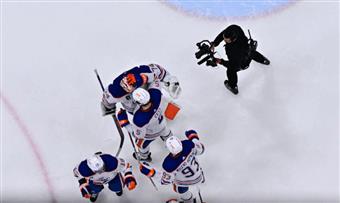
ESPN is working with NHL to expand the access of Skate Cam. Here, the camera was used by ESPN at Amerant Bank Arena in Sunrise, FL, during the 2024 Stanley Cup Final. (Photos: Phil Ellsworth/ESPN Images)
During the Four Nations Face-Off tournament earlier this year, ESPN and the NHL tested new parameters for Skate Cam deployment. The results were electric.
After a goal, getting that Skate Cam onto the ice gave us a view of the celebration that was really special, Schulz recalls. It was one of those moments when everyone in the truck went, Ooh, what's that?' You don't get many of those anymore, that surprise. We're bringing that back for Opening Night and for our major tentpole events.
The broadcaster is also working closely with the NHL to integrate MindFly, a body-mounted camera system that records stabilized, first-person video and audio. It has been used in the past during pregame moments at the Stanley Cup Final.
MindFly's best use might actually be hockey, Schulz points out. Because players are on skates, the movement is so smooth. During Four Nations, we put it on referees, and the experience was outstanding. It's something we're aiming to expand into regular-season and special-event coverage.
Audio as AtmosphereHockey's energy is not only seen but heard: the slicing of skates, the rattle of boards, the smack of a slapshot. ESPN's audio team has worked to elevate that sensory experience into a storytelling tool.
Our sound design is about the experiential part of hockey, says Wetherbee. The puck moves so fast and the cuts are so quick that the sound has to follow the action dynamically.
Each broadcast now features multiple-layered audio mixes, crafted in real time by the A1 inside the truck. Every rinkside-glass microphone - three to six per goal for major events - feeds into a custom 5.1 submix that can pan and fade in sync with the camera cut. The result: a soundscape that tracks with the visuals, bringing the home viewer's ears right to the ice.
For Opening Night, that immersion will go a step further, with limited referee mics and new ambient configurations designed to highlight in-game communication: whistles, line calls, even snippets of player chatt
More from Sports Video Group
05/12/2025
2025 Sports Broadcasting Hall of Fame: Curt Gowdy Jr. - Master Storyteller, Nati...
05/12/2025
SVG Sit-Down: Veritone's Sean King on the Power of Mining Video, Audio DataThe company's Data Refinery offers users total control and governance over da...
05/12/2025
Platinum White Paper: Inside the Nashville Predators' Unified, Flexible, Sca...
05/12/2025
Netflix Reaches Agreement To Acquire Warner Bros. Following Planned WBD SplitThe deal does not include WBDs sports assets like TNT Sports (US, UK, LatAm), Euros...
05/12/2025
FOX Sports Returns to Indianapolis for Primetime Broadcast of Big Ten Championsh...
05/12/2025
SVG Summit 2025 Preview: Digital Engagement & Monetization Workshop Tackles the ...
05/12/2025
Atlanta United Lights Up New Emory Healthcare Studio With First Live Broadcast f...
05/12/2025
As Messi Takes the Pitch, MLS, Apple, NEP Roll Out Largest MLS Cup Production Ev...
05/12/2025
ESPN Enters College Football's Most Intense Month With Elevated Workflows fo...
04/12/2025
SVG Sit-Down: ProximaVision's Claudio Lisman on Why Tethered Drones Could Be...
04/12/2025
SVG Campus Shot Callers: Imry Halevi, Senior Associate Director of Athletics, Co...
04/12/2025
Platinum White Paper: LiveU Lightweight Sports Production: A Step Change in Spor...
04/12/2025
London to Riyadh: DAZN brings the boxing glamour to new production levels for Be...
04/12/2025
Analysis: Paramount bets on the battering ram' with Champions League play By Callum McCarthy, Editor-at-Large
Tuesday, December 2, 2025 - 10:12
Print ...
04/12/2025
Space City Home Network Launches SCHN DTC App for Astros and RocketsThe Rockets and Astros were previously the lone NBA and MLB teams without a DTC appBy Jason...
04/12/2025
SVG Summit 2025 Preview: Content Workflows Workshop Spotlights Evolution of Spor...
04/12/2025
New Sponsor Spotlight: Geotech's Patrick Wambold On the Unreal Engine Revolu...
04/12/2025
Curt Gowdy Jr. - Master Storyteller, Nationally and RegionallyBy Jason Dachman, Editorial Director, U.S.
Thursday, December 4, 2025 - 1:52 pm
Print This Sto...
03/12/2025
MLS Cup 2025 Production To Feature Four iPhone 17 Pros as Game-Coverage CamerasStay tuned to SVG on Friday for our in-depth story on this year's MLS Cup pro...
03/12/2025
SVG LIVE! 2025: All Sessions Now Available to Watch on SVG PLAYThe inaugural event placed a spotlight on the exciting world of live entertainmentBy SVG Staff
...
02/12/2025
Case Study: How Mid-Atlantic Sports Network Moved to All-IP Distribution in 60 D...
02/12/2025
2025 Sports Broadcasting Hall of Fame: Lee Corso, Coach, Commentator, FirebrandBy Ken Kerschbaumer
Tuesday, December 2, 2025 - 7:00 am
Print This Story | S...
02/12/2025
SVG All-Stars: Dan Nabors, Senior Director, Remote Engineering, TNT SportsThe veteran tech leader is helping guide Warner Bros. Discovery's at-home' re...
02/12/2025
Epic rematch: DAZN on bringing Eubank Jr v Benn II to spectacular life with 1080...
02/12/2025
National Lacrosse League Opens Season With New Cloud-Based Official Replay-Revie...
02/12/2025
Platinum White Paper: The Cinematic Look in Live Production - Bridging Aesthetic...
02/12/2025
SVG India Announces Advisory Board; JioStar's Prashant Khanna Named ChairmanBy Ken Kerschbaumer
Tuesday, December 2, 2025 - 11:15 am
Print This Story |...
02/12/2025
SVG Summit 2025 Preview: New AI Production Tools Workshop' Features ESPN, F...
26/11/2025
SVG Sit-Down: Prime Video EP Mike Muriano Previews Massive Black Friday Slate Fe...
25/11/2025
SVG All-Stars: Blayke Scheer, Senior Director, Creative Content, YES NetworkThe Indiana alum has turned storytelling into an artform for more than two decadesBy...
25/11/2025
Op-Ed: With FCC's C-Band Auction on the Horizon, Broadcasters Need Proven, C...
25/11/2025
Analysis: Is Baller League really the future of sport? By Callum McCarthy, Editor-at-Large
Tuesday, November 25, 2025 - 10:10
Print This Story
With KSI on...
25/11/2025
Platinum Whitepaper: The Growth of Broadcast in the World of Major Large Scale E...
25/11/2025
SVG Summit 2025 Preview: SVG Women's Sports WorkshopBy Samantha Gabay
Tuesday, November 25, 2025 - 10:27 am
Print This Story | Subscribe
Story Highlig...
25/11/2025
SVG New Sponsor Spotlight: CacheFly's Matt Levine on the Evolving Role of th...
25/11/2025
Peacock's EA SPORTS Madden NFL Cast Levels Up on Thanksgiving With SkyCam as...
24/11/2025
HBO's The Shuffle' Reveals Longtime Connection of Sports and Entertainm...
24/11/2025
2025 Sports Broadcasting Hall of Fame: Hiroshi Kiriyama, Sony Broadcast (and Ind...
24/11/2025
SVG Summit 2025 Preview: FIFA, NBC Olympics, Fox Sports, CBS Sports, Netflix, NF...
24/11/2025
Case Study: YES Network Streamlines Broadcast Operations with Beam DynamicsBy SVG Staff
Monday, November 24, 2025 - 11:18 am
Print This Story | Subscribe
...
24/11/2025
Platinum White Paper: More of Everything: How Broadcasters are Changing Their Ap...
24/11/2025
Versant Media USA Sports President Matt Hong on How Versant Has Best of Both Wor...
24/11/2025
SVG Sit-Down: NABA Director-General Rebecca Hanson on How FCC's C-Band Aucti...
24/11/2025
SVG New Sponsor Spotlight: Bolin Technology's Sapan Doshi on the Proliferati...
21/11/2025
Platinum White Paper: Appear Shares Why Media Exchange Is the Missing Link in So...
21/11/2025
NWSL Championship 2025: CBS Sports To Deploy Two-Point FlyCam for Match Coverage...
21/11/2025
NWSL Caps 2025 Season With Awards Show, Skills Challenge ProductionsA team of 70 is on the ground in California to produce both eventsBy Mark J Burns, SVG Contr...
21/11/2025
USL and NEP Ready for Largest USL Championship Final Production EverThe broadcast from Tulsa, OK, will air CBS and TUDN on Saturday at 12 p.m. ETBy Jason Dachma...
21/11/2025
With Two New Teams, PWHL Boosts Production Workforce and Central Review for Seas...
20/11/2025
MLB Media-Rights Shakeup: NBC's New Three-Year Deal Covers Sunday Night Bas...














 NHL Faceoff 2025: Entering Its Fifth Year as League Partner, ESPN Captures the Sport's Speed, SubtletyNew tools, refined workflows bring hockey's breakneck pace closer to the fanBy Brandon Costa, Director of Digital