The Hunger Games: Mockingjay, Katniss leads an invasion with a handheld hologram device, and Beetee sits before a multi-panel computer display in order to hack into the Capitol. Tony Stark puts his Iron Man helmet on, and hundreds of relevant graphics animate to life: maps locating nearby enemies, flight controls, suit diagnostics, and holographs all help to tell the stories in Iron Man and The Avengers. Floor-to-ceiling glass/holographic displays enable James Franco to explain how a new drug will make apes smarter in Rise of the Planet of the Apes.
Jayse Hansen has gained international attention for designing some of the most iconic fictional user interfaces in film history. His work specializes in revealing the details beneath the surface of machines, computers and hero devices' such as holographic tablets in Ender's Game, or the creation of new superhero gear using holographic tables in Disneys Big Hero 6. In the film Pixels, look closely for his many '80s video game nods and easter eggs hidden in the advanced military UIs.
In addition to designing for the fictional film world, Hansen has also consulted and designed for various real-world software companies in VR and AR, as well as the US Department of Defense on strategies to use his outside-the-limits design thinking to dramatically increase efficiency for dealing with immense amounts of time-sensitive, mission-critical information.
Hansen's work is featured in the April/May 2016 issue of Computer Graphics World, while more of his designs can be found on his website at www.jayse.tv. Here, he continues the discussion about his workflow and this unique genre of computer graphics.
You've provided fictional user interface (FUI) graphics to memorable scenes in some of today's most beloved films. Can you tell us what an FUI is, and how the story influences your designs?
FUI graphics are used in instances where a character in a film is interacting with a computer or display technology of some kind. The technology can be worn on the head as a heads-up display (HUD), like in Iron Man when he puts his helmet on and is surrounded by hundreds of relevant data graphics, or a hologram, like when Hiro assembles the armor for Baymax in Big Hero 6 , or in The Force Awakens when R2-D2 and BB-8 project their holograms of the map to Luke Skywalker. These elements are all designed, modeled, and animated by a small, specialized team of VFX artists. They both rely on and support the narrative of the film. They are always designed to move the story along in some dynamic and interesting way.
FUI graphics seems to be a specialty within visual effects content creation. How did you start designing this way?
Ive actually been obsessed with screens in movies and TV since I was a child, but I didnt know it was someones job to actually create these things. When I met Mark Coleran (who coined the term FUI and is a master at it creating content in films like Bourne Identity, The Island, Mission Impossible, and so on) I knew that was the direction I wanted to dive into with full force. It fits my love of research, pixel perfection, and super creative thinking. Its really an awesome job!
In a film, you are called in to create designs at different phases of production, both preproduction and postproduction. Can you tell us about that?
It differs with the needs of each film. On Mockingjay , I was designing and animating on set with Cantina Creative in Atlanta. The director, Francis Lawrence, wanted to have all designs live on set, not only for lighting, but more importantly so that the actors had something they could emotionally react to since a big part of that film was told through the screens. Sometimes the director will want something that cant be done practical on set, such as Katnisss (Jennifer Lawrence's) mini hologram that she carries with her through the film to locate President Snows traps, or when Han Solo (Harrison Ford) and Rey (Daisy Ridley) are walking through BB-8s hologram on the Millennium Falcon in The Force Awakens . In that case, Ill get brought back in postproduction. For The Force Awakens , for instance, I was brought on board VFX master Andrew Kramers excellent team at Bad Robot to help design and animate key moments after the film was shot.
How do you approach an empty digital canvas, so to speak? Can you tell us more about your workflow?
That empty canvas is both exciting and terrifying, so Ive worked out a few ways that I tackle it. I always start on paper. I allow myself to draw really badly and just get ideas out because even a scribble is less terrifying than a blank page. Then it becomes really apparent what I need to research and it flesh out. I'll also look at hardware for shapes and re-imagine those as software. Then I go straight to Illustrator from paper, and straight from Illustrator to After Effects for compositing and animation, and then back and forth between Cinema 4D and After Effects to add dimensionality.
The topic of virtual reality and augmented reality in entertainment content creation are trending topics at the moment. Are VR and AR graphics created in the same way but just viewed differently?
Somewhat, both tend to be assembled in a real-time game engine, such as Unity. But the needs and purposes of each can be dramatically different. In VR, for instance, you are blocking out your world and substituting it with an artificial reality. So a complete world needs to be built. In AR, its more about the integration of your physical world with digital content. A company I consult for, called Meta (getameta.com), is doing the most amazing things right now and really leading the pack in this early development of fully immersive AR. Theyre allowing you to fully interact with your digital content. The digital content can be fanciful, like a lifelike dinosaur that runs acr
Most recent headlines
05/01/2027
Worlds first 802.15.4ab-UWB chip verified by Calterah and Rohde & Schwarz to be ...
09/10/2026
September 10 2026, 06:00 (PDT) Dolby Expands Dolby OptiView Platform with New Capabilities at IBC 2026
New Sports Intelligence helps providers better unders...
07/10/2026
Dalet, a leading technology and service provider for media-rich organizations, today announced the latest Long-Term Supported (LTS) release of Dalet Flex. Build...
02/10/2026
Design reflects feedback on graphics introduced for MLB Red Sox and Pirates games
Boston Bruins games on NESN and Pittsburgh Penguins games on SportsNet Pittsb...
02/10/2026
NEP SS7/ST7 anchors Big Ten Saturday Night; nine Peacock games are produced from...
02/10/2026
In-venue and creative video staffers at the professional and collegiate level ha...
02/10/2026
GameTime Productions provided national broadcast production services for the Athletes Unlimited Softball League (AUSL) 2026 season, with coverage distributed ac...
02/10/2026
Audio-Technica has introduced the HP-HBM50x, a genuine replacement headband for the ATH-M50x professional studio monitor headphones. The HP-HBM50x is compatible...
02/10/2026
Advanced Systems Group (ASG) has helped audio professional Steve Schatz design and build Black Lava Studios, a 9.1.6 Dolby Atmos mixing and mastering facility i...
02/10/2026
Cobalt Digital has received Best of Show awards from TV Tech and TVB Europe at IBC2026 for solutions from its PACIFIC compression line.
TV Tech recognized the ...
02/10/2026
ESPN and TMRW Sports have announced a multi-year extension of their U.S. media rights agreement for TGL presented by SoFi. The 2027 TGL season will open Sunday,...
02/10/2026
Devlin Design Group (DDG) and Clickspring Design (CSD) have announced a strategic alliance combining their design capabilities for broadcast, media, workplace, ...
02/10/2026
The National Collegiate Hockey Conference has announced a partnership with CSMG (Collegiate Sports Management Group) making the firm the exclusive representativ...
02/10/2026
Mediaproxy will exhibit at NAB Show New York (Booth 561, Javits Center, October 21-22), demonstrating new AI capabilities in its LogServer compliance platform a...
02/10/2026
Mesh Broadcast Services has installed a Calrec Argo M console in the production area of its Eclipse 40-foot mobile unit, recently moved onto a 2025 Freightliner...
02/10/2026
Vizrt has announced that Richmond AFL has signed on to use Viz Libero Teams for coaching analysis and content creation. The platform provides 3D match analysis ...
02/10/2026
Oak View Group (OVG) has announced Cisco as an Official Technology Partner. Thro...
02/10/2026
Clear-Com has announced that the Audiovisual Training Centre in d , Poland, has installed an Arcadia Central Station as the communications hub for its broadca...
02/10/2026
A major figure in international football, three-time French champion and three-time Ligue 1 top scorer, Sonny Anderson will chair the SPORTEL Awards 2026 Jury. ...
02/10/2026
California-based Bantaray Mobile Sports Production has built its mobile producti...
02/10/2026
Overtime has announced a new strategic investment led by Eldridge Capital Management. Eldridge has investments across sports and media including the Los Angeles...
02/10/2026
The Milwaukee Bucks have launched Bucks , a direct-to-consumer streaming service that expands access to Bucks games during the 2026-27 season for fans statewide...
02/10/2026
v1.9.3 introduces AUv3 support
Roland have just released an update that kits their free iPad-based software synth out with AUv3 support, meaning it can now ...
02/10/2026
Dolby Atmos support, AI-powered stem separation & more
The latest version of MOTU's DAW software is now available, and marks a major step forward with t...
02/10/2026
Portable DAC created in collaboration with Steve Levine
British hi-fi experts iFi audio have unveiled a new Master Tuned variant of their praised iDSD GR2 p...
02/10/2026
New SBS podcast How Australia Works helps migrants to navigate Australia's d...
02/10/2026
01 October 2026 | Johannesburg, South Africa - The National Film and Video Foundation (NFVF), an entity of the Department of Sport, Arts and Culture (DSAC), is ...
02/10/2026
In our latest blog, Tim Pearson looks at streaming piracy from a different lens, focusing on digital trust, consumer risk, and the future of subscriber protecti...
02/10/2026
Share
Copy link
Facebook
X
Linkedin
Bluesky
Email...
02/10/2026
Share
Copy link
Facebook
X
Linkedin
Bluesky
Email...
02/10/2026
Share
Copy link
Facebook
X
Linkedin
Bluesky
Email...
02/10/2026
Share
Copy link
Facebook
X
Linkedin
Bluesky
Email...
02/10/2026
Haymaker VFX acquires SWISS
Brie Clayton October 2, 2026
0 Comments
Stockholm-based, globally recognized creative team becomes part of Haymaker VFX in...
02/10/2026
Treasure & Dirt Shot with URSA Cine 17K 65
Brie Clayton October 2, 2026
0 Comments
DP Edward Goldner, ACS, relied on 65mm sensor to capture vast deser...
02/10/2026
Sonnet Announces Industry's Only Bus-Powered 10 Gigabit Ethernet Thunderbolt...
02/10/2026
Mediaproxy brings AI driven monitoring and browser based multiviewing to NAB Sho...
02/10/2026
Cobalt Digital's Pacific Line Wins Two Future Best of Show Awards at IBC
Brie Clayton October 1, 2026
0 Comments
Manufacturer receives honors from...
02/10/2026
Share
Copy link
Facebook
X
Linkedin
Bluesky
Email...
02/10/2026
Share
Copy link
Facebook
X
Linkedin
Bluesky
Email...
02/10/2026
Share
Copy link
Facebook
X
Linkedin
Bluesky
Email...
02/10/2026
Share
Copy link
Facebook
X
Linkedin
Bluesky
Email...
02/10/2026
Share
Copy link
Facebook
X
Linkedin
Bluesky
Email...
02/10/2026
Share
Copy link
Facebook
X
Linkedin
Bluesky
Email...
02/10/2026
Cinematographer Andres Arochi was on his way back from filming in Spain when he got the call that Tim Burton would be directing a music video for Lady Gaga and ...
02/10/2026
Cobalt Digital's Pacific Line Wins Two Future Best of Show Awards at IBC
Manufacturer receives honors from both TV Tech and TVB Europe for advancements in...
02/10/2026
Maxon, maker of powerful, approachable software solutions for creators working in 2D and 3D design, motion graphics, visual effects and visualization, today ann...
02/10/2026
The strengthened TriCaster portfolio increases accessibility to leading media technology, drives more creative experiences, and scales with every production wit...
02/10/2026
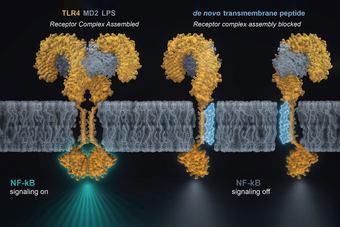
LA JOLLA, CA-To sense their environment and respond accordingly, cells enlist me...
02/10/2026
Friday 2 October 2026
Crystal Lake, a Friday the 13th' prequel series, com...
02/10/2026
Friday 2 October 2026
Sky VIP helps families celebrate the Christmas season wit...














 The Hunger Games: Mockingjay, Katniss leads an invasion with a handheld hologram device, and Beetee sits before a multi-panel computer display in order to hack into the Capitol. Tony Stark puts his Iron Man helmet on, and hundreds of relevant graphics animate to life: maps locating nearby enemies, flight controls, suit diagnostics, and holographs all help to tell the stories in Iron Man and The Avengers. Floor-to-ceiling glass/holographic displays enable James Franco to explain how a new drug will make apes smarter in Rise of the Planet of the Apes.