By Kiera Williams
Every year, a new group of emerging media and entertainment professionals steps into the HPA community - curious, talented, and ready to grow. This year is no different. Meet the YEP Class of 2026.
But before we get into introductions, let's talk about where they started.
First Look: YEP 2026 at the HPA Tech Retreat The HPA Tech Retreat is unlike most industry events. World-class engineers, technologists, executives, and creatives step away from their daily routines to have the kinds of conversations that don't happen anywhere else - rigorous, specific, and unfiltered. The ideas don't stay onstage either; they spill into roundtables, dinners, and late-night conversations that keep going long after the sessions end. For a first-timer, that can feel like being handed a firehose. For this cohort, it felt like exactly the right place to begin.
Nicolas Nico Cantrell, a newcomer to the industry, put his finger on what makes the retreat different from other professional gatherings. When you ask an expert about their work in most contexts, you get their elevator pitch, polished and generalized. At the HPA Tech Retreat, that's not what's on offer. The conversations move at peer level, expert to expert, with the kind of specificity that only comes when a room assumes everyone in it already knows the basics.
There is something uniquely valuable about the depth and specificity that comes from expert-to-expert dialogue
For someone still finding their footing, being trusted with that conversation is its own kind of education.
Fatima Kundiri appreciated that depth without feeling buried by it. The retreat's single-track format - one presentation at a time, everyone in the same room - kept the experience grounded. She walked away with a fresh perspective on the evolving media landscape and called out Every Company is a Media Company as her favorite session, noting that the insights from several panels were ones she could bring directly back to her work. It was energizing to engage in thoughtful conversations with other professionals, she said and that energy, the kind that builds when smart people are given real space to talk, was something the whole cohort seemed to carry out of the room.
Ryan Wellence came in with more conference mileage than most YEPs - NAB, the SMPTE Media Tech Summit, Production Summit - but found the HPA Tech Retreat offered something the others don't quite replicate. His highlight reel included Joshua Pine's Annual Report from the Complaint Department, a well-earned crowd reaction to ffmpeg support in the ACES and OpenColorIO updates, and a session on emerging creator workflows that acknowledged the growing wave of independent talent reshaping production. But the session that landed hardest was personal: Dreaming of What the Future Holds In Our Lifetime, presented by former YEPs to open the conference. For Ryan, it reoriented something.
In present times that feel like we're moving a mile a minute, thinking of the future seems like we can only think of tomorrow.
Seeing people from this same program already leading that conversation made the program feel less like a starting line and more like a continuum he was now part of.
Conversations Around Technology and Creativity If there was one thread woven through nearly every session at this year's retreat, it was AI. And this cohort engaged with it honestly and the kind of nuance the topic desperately deserves.
Mike Binder showed up with his position already formed. By his own accounting, he walked in a 3 out of 10 on the AI acceptance scale - closer to ban everything than let it take over. He left somewhere around a 5, pushing 6. What shifted him wasn't a single argument but an accumulation: a presentation by Secret Level, whose three-minute fully AI-generated short film was, by Mike's admission, about 70% indistinguishable from traditionally produced work. What struck him most was realizing he was watching it wrong.
I found myself critiquing the shot and how it affected the story instead of the AI content and how it looked. Usually it's always the opposite critique.
That shift from scrutinizing the tool to scrutinizing the storytelling is one the industry can stand to make. Multiple presenters framed it through the lens of Detroit's auto industry: a cautionary tale about an ecosystem that refused to adapt until it was too late. The warning to Hollywood wasn't subtle. Generative AI is lowering the barrier to content creation, and a flood of it is already here. But as Mike noted, taste is scarce. Anyone can push a button. It still takes a human - with judgment, with vision, with something to say - to make something worth watching.
HPA President Renard T. Jenkins offered the frame that perhaps best settled the anxiety underneath all of it. Hollywood, he argued, is not a place - it's a concept. That's why places like Bollywood exist. The concept, wherever it lives, doesn't die.
Amy Chew arrived at the same conversation from a different direction. At the YEP Panel, speaker Ben Abergel offered a provocation that stayed with her: If there is a piece of tech that you're interested in, try to use it for something it wasn't meant to be used for. At first, it's permission to play, but Amy heard something more:
It made me think about how much value comes from the creative process when we make mistakes or think outside of the box - something that artificial creativity is not designed to replicate. It makes me think: what are we losing when we use AI to automate the processes we use to create?
That's not a question with a clean answer. But the fact that it's being asked earnestly, and by someone early in their career, says something about who this cohort is.
What They're Here For The retreat
Most recent headlines
05/01/2027
Worlds first 802.15.4ab-UWB chip verified by Calterah and Rohde & Schwarz to be ...
09/10/2026
September 10 2026, 06:00 (PDT) Dolby Expands Dolby OptiView Platform with New Capabilities at IBC 2026
New Sports Intelligence helps providers better unders...
07/10/2026
Dalet, a leading technology and service provider for media-rich organizations, today announced the latest Long-Term Supported (LTS) release of Dalet Flex. Build...
02/10/2026
Share
Copy link
Facebook
X
Linkedin
Bluesky
Email...
02/10/2026
Share
Copy link
Facebook
X
Linkedin
Bluesky
Email...
02/10/2026
Share
Copy link
Facebook
X
Linkedin
Bluesky
Email...
02/10/2026
Share
Copy link
Facebook
X
Linkedin
Bluesky
Email...
02/10/2026
Share
Copy link
Facebook
X
Linkedin
Bluesky
Email...
02/10/2026
Share
Copy link
Facebook
X
Linkedin
Bluesky
Email...
02/10/2026
Cinematographer Andres Arochi was on his way back from filming in Spain when he got the call that Tim Burton would be directing a music video for Lady Gaga and ...
02/10/2026
Cobalt Digital's Pacific Line Wins Two Future Best of Show Awards at IBC
Manufacturer receives honors from both TV Tech and TVB Europe for advancements in...
02/10/2026
Maxon, maker of powerful, approachable software solutions for creators working in 2D and 3D design, motion graphics, visual effects and visualization, today ann...
02/10/2026
The strengthened TriCaster portfolio increases accessibility to leading media technology, drives more creative experiences, and scales with every production wit...
02/10/2026
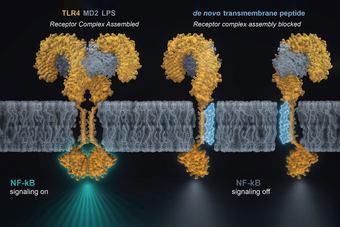
LA JOLLA, CA-To sense their environment and respond accordingly, cells enlist me...
01/10/2026
Big Blue Marble has announced the addition of live multiview channels to its Clo...
01/10/2026
The company CEO sees AI as a tool in speeding and enhancing product development
...
01/10/2026
Production, tech, crewing, and logistics teams draw on experience of a busy inau...
01/10/2026
The Partnership Will Support Filmmakers Worldwide Through Original Short Films I...
01/10/2026
Third collaboration with celebrated composer
Spitfire Audio have once again teamed up with Grammy-nominated composer, producer and technologist BT, creating...
01/10/2026
FL Studio gets dedicated grid controller
Novation have teamed up with FL Studio developers Image-Line to create another dedicated controller for the popular...
01/10/2026
Six new USB interfaces introduced
Universal Audio's USB audio interface line-up has just been refreshed, gaining six new models aimed at musicians, prod...
01/10/2026
Siretta's SNYPER-5G cellular network analyser has been shortlisted for the IoT Global Awards 2026.
The IoT Global Awards recognise products, services and o...
01/10/2026
Johannesburg, South Africa, 30 September 2026 - The National Film and Video Foun...
01/10/2026
Mesh Broadcast Services Fits Big-Truck Audio Power into Compact Eclipse Unit with Calrec Argo M Canadian OB company Mesh Broadcast Services has fitted its Eclip...
01/10/2026
Share
Copy link
Facebook
X
Linkedin
Bluesky
Email...
01/10/2026
For more than two decades, Disguise has powered some of the most ambitious live events and experiences in the world from Bad Bunny and Coachella to the Burj K...
01/10/2026
Share
Copy link
Facebook
X
Linkedin
Bluesky
Email...
01/10/2026
Share
Copy link
Facebook
X
Linkedin
Bluesky
Email...
01/10/2026
Share
Copy link
Facebook
X
Linkedin
Bluesky
Email...
01/10/2026
Share
Copy link
Facebook
X
Linkedin
Bluesky
Email...
01/10/2026
Share
Copy link
Facebook
X
Linkedin
Bluesky
Email...
01/10/2026
The Australian football team can turn match footage into tactical insights to improve performance and maximize fan engagement
Vizrt, the AI platform for visual...
01/10/2026
When Mesh Broadcast Services set out to fit the pro audio capability of a large TV truck into a small audio room for high-profile sports events, Calrecs Argo M ...
01/10/2026
Emergent, the browser-native broadcast graphics platform, today announced the appointment of Tom Shelburne as Head of Business Development, North America, effec...
01/10/2026
Melbourne, Australia 1 October 2026: Mediaproxy, the global standard for software-based IP compliance monitoring and multiviewing solutions, will showcase maj...
01/10/2026
Clear-Com is supporting the education and development of future audiovisual industry professionals in Poland through the deployment of its Arcadia Central Sta...
01/10/2026
Telef nica Servicios Audiovisuales (TSA), the audiovisual services arm of global telecommunications group Telef nica, has supplied and commissioned an LED wall ...
01/10/2026
Share
Copy link
Facebook
X
Linkedin
Bluesky
Email...
01/10/2026
Share
Copy link
Facebook
X
Linkedin
Bluesky
Email...
01/10/2026
Share
Copy link
Facebook
X
Linkedin
Bluesky
Email...
01/10/2026
Share
Copy link
Facebook
X
Linkedin
Bluesky
Email...
01/10/2026
Eleven minutes between headliners. The sponsor loop needs to be on screen now, and the only operator on hand is the one running lights. With the Green Hippo Est...
01/10/2026
DigiBox has announced a new partnership with FOR-A to represent the innovative MixBoard product range in the UK market, further expanding its portfolio of broa...
01/10/2026
Screen Australia-funded documentaries bring Australian experiences and new persp...
01/10/2026
Mavis Camera 8.2 adds iPhone 18 Pro support with variable aperture control
Brie Clayton September 30, 2026
0 Comments
Latest release also introduces P...
01/10/2026
Ghosts of the Gold Rush Shot with PYXIS 6K
Brie Clayton September 30, 2026
0 Comments
Blackmagic Design cameras expertly capture documentary while del...
01/10/2026
RE:Vision Effects - RSMB V7 is here!
Lori Freitag September 30, 2026
0 Comments
ReelSmart Motion Blur 7 is here, the RSMB V7 cycle is open. ReelSmart ...
01/10/2026
VideoGen raises $3.3M seed as its AI video platform passes 5 million users
Brie Clayton September 30, 2026
0 Comments
VideoGen co-founders Anton Koeni...
01/10/2026
New taproom, restaurant, lounge and theater in the historic Power Plant add to ATC's growing social hub
Fullsteam Brewery and CBC Real Estate celebrate th...
01/10/2026
Berklee and APM Music Launch Global Catalog Bringing Student-Created Music to Fi...














 By Kiera Williams