SVG Sit-Down: Veritone's Sean King on the Power of Mining Video, Audio DataThe company's Data Refinery offers users total control and governance over data assetsBy Ken Kerschbaumer
Friday, December 5, 2025 - 7:00 am
Print This Story | Subscribe
Story Highlights
Lots of companies are talking about AI and its role in the sports-media landscape, but Veritone is one of the leaders when it comes to deals, with organizations like the Masters, the USTA, and the NCAA on board as clients. Veritone Chief Revenue Officer/GM, Commercial, Sean King leads all sales and marketing activities for the organization, in addition to overseeing the Commercial division, including SaaS technologies and managed services. He sat down with SVG to discuss key market trends, the Veritone tech stack, and much more.
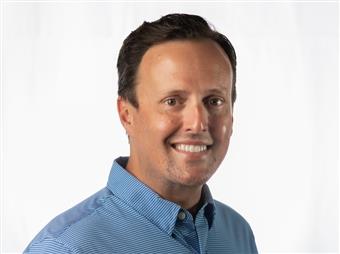
Veritone's Sean King is looking forward to a busy 2026 with the Winter Olympics and the World Cup.
From a Veritone perspective, what have been some of the key milestones of the past year?
Our Data Refinery, which is where we're helping all our customers in both the commercial and public sector, [gain] total control and governance over their data assets, specifically their unstructured data, all their audio and video.
As we're ingesting all the footage - either onsite or remote - we're taking that content, making it structured, making it searchable, and helping them have the necessary governance. If they want to take their assets and make them available for search and discovery to be licensed for secondary and tertiary use cases or if they want to use that data to build an internal workflow or model or even make that data licensable to other companies, it allows us to give them a view into all their data, structured or unstructured, and the necessary tools to govern, to monetize, or to manage it.
In terms of data, there are the stats - lineups, things like that - that are input into video files. Then there's the audio track with announcers, captioning information, and, of course, facial recognition and object tracking. When you look at that ocean of data, what kind of stuff boils up and makes the most sense?
Specifically, we look at everything that's in the audio and video. We look at third-party data, from Stats Perform or Sports Radar, that we can time-correlate to what's taking place. But, for us, it's everything that's taking place on screen, whether it be face, logo, or objects.
You could say, Okay, let me find an image of Tiger Woods in a red Nike shirt and let there be an image of a Rolex in the background. We search through all those [images] and find what meets that multivariant search criteria. It's about giving that frame-by-frame annotation of everything on the screen or in the recording, and, if someone wants to marry that with those third-party data sources, you have the total flexibility to do so.
One of the challenges, obviously, is to manage archives and begin the process of digitizing things. What is your advice for someone who hasn't begun the journey? Even colleges, universities, and high schools are looking at what they should be doing. What are your tips?
It's a great question, and I think you've got to look at it two-fold. I always like to give the analogy of driving your car. The first thing you have to do is pay attention to what's in the windshield in front of you. Everything that's coming at me: how am I going to make sure that, as I'm going forward, I'm capturing everything? Making sure that I have all the control, all the data, and all the monetization opportunities - that's step one.
Step two is, Okay, now let me look in my rearview mirror and let me see all the places that I've sat before. The catch-up, especially the digitization, can be a time-consuming and costly endeavor. Start with the high-value, high-touch ones like the big historical moments. Once you start there, you can see the monetization opportunities and let those opportunities fund the catch-up of the rest.
It's also important to realize it's not just an opportunity; it's the preservation of history. Pretty soon, things I watched in the late '70s and early '80s won't be watchable under traditional means. The Betamaxes and VHSes are going the way of the dodo very soon. There won't be the physical ability to look at these things, so start with your high-value, high-touch, the ones that you know and just go from there.
Last week, I heard someone on stage at an event say that, if you're overwhelmed with all these tapes sitting in a facility somewhere, just get rid of them. Do you agree with that? Should leagues or teams say, You know what, there are some things that it's just not worth the effort of digitizing, so let's just let it go ? Is that too crazy?
It's provocative, I will say that. Using the phone analogy, I know my photos are backed up to my iCloud or my OneDrive. I have ways to do it. So I would say I am not a fan of saying, Throw it away. Before you take that step, make sure you know everything that you at least have, because so much of the value is not necessarily in content known but in what you don't know.
Content is being monetized in new ways; social-media platforms want different types of content. How do you see the explosion of monetization opportunities around archives and this content going forward? How is that landscape changing?
For us and our partners, it has been great. People's thirst for content has not gone down, and how people are consuming content has radically changed. You don't have two social-media apps; you have 10, and it's both an opportunity and a challenge. The opportunity is monetization, but you have to meet your customers where your viewers are now. You have to be able to find, distribute, and track the conten
More from Sports Video Group
02/03/2026
NBC Sports selected Imaginary Forces to create the main title sequence for the M...
02/03/2026
The NFL announces the launch of the NFL Draft Innovation Challenge, a new crowds...
02/03/2026
The World Teleport Association (WTA) has named Skyline Communications' DataMiner SatOps solution as a finalist for the 2026 Teleport Technology of the Year ...
02/03/2026
Ventum Tech announces a strategic partnership with Pixotope, a real-time graphic...
02/03/2026
Victory , a free, ad-supported sports streaming service, announces the launch of...
28/02/2026
With two features seen in Formula 1 coverage, the broadcaster aims to bring view...
27/02/2026
The E.W. Scripps Company names Oliver Gray as Vice President, Network Sports and...
27/02/2026
The Gotham Sports App, the exclusive direct-to-consumer streaming home of MSG Networks and the YES Network, is now available for purchase through Prime Video fo...
27/02/2026
ESPN and the Horizon League announce a new multi-year, multi-platform media rights agreement, continuing a 38-year collaboration that began with the 1988 Midwes...
27/02/2026
At the 2026 NAB Show in Las Vegas, NETGEAR will highlight its new switch models and major updates to its Engage Controller software. The company's network d...
27/02/2026
Riedel Communications announces that Fondazione Teatro alla Scala has deployed a...
27/02/2026
Lyuno specializes in media localization, including translation, dubbing, subtitling, and voice-over services for a wide array of entertainment content. The comp...
27/02/2026
Chyron Weather 2.3, the latest edition of Chyron's weather visualization suite for broadcasters and meteorologists, recently launched.
The release includes...
27/02/2026
Telestream, which concentrates in media workflow technologies, announces expanded practical AI enhancements across its Vantage, Vantage Cloud, EDC, Stanza, and ...
27/02/2026
Horizon Sports & Experiences (HS&E), a global sports marketing, media, and live ...
27/02/2026
Legendary sports broadcasters Bob Costas, Doug Collins, Mike Czar of the Telest...
27/02/2026
Beginning on March 1st, IndyCar will be kicking off their 31st season on the str...
27/02/2026
In-venue and creative video staffers at the professional and collegiate level ha...
27/02/2026
Ratings Roundup is a rundown of recent rating news and is derived from press rel...
27/02/2026
Owl AI a pioneer in artificial intelligence for professional sports, announces a...
27/02/2026
With over 447 million fans in APAC, Formula 1 and beIN will continue to innovate...
27/02/2026
12-year-old Noelle Taylor will be the Kid Reporter when the Brooklyn Nets host t...
27/02/2026
Entire CapCam system - including camera unit, RF transmitter, and battery - is h...
26/02/2026
Multi-angle coverage, on-demand access to ultra-high-resolution video are provided for replays and clips across multiple distribution channels
The NHL and Cosm...
26/02/2026
Advanced Systems Group, LLC (ASG), a technology and services provider for media creatives and content owners, has appointed Jody Boatwright as Chief Strategy Of...
26/02/2026
As players report to Spring Training, TikTok and MLB announce an expanded content partnership bringing baseball fans around the world closer to the game through...
26/02/2026
Chyron announces its 2026 Designer of the Year Competition to be awarded during a live stream from the 2026 NAB Show in Las Vegas. This year's competition i...
26/02/2026
Appear, which specializes in live production technology, announces that its X Platform has been officially verified by YouTube for Secure Reliable Transport (SR...
26/02/2026
Adder Technology, a specialist in connectivity solutions and high performance IP...
26/02/2026
Harmonic announces that Alcom, a leading telco operator in Finland, is powering its next-generation white-label headend video service with Harmonic's XOS Ad...
26/02/2026
ESPN, Disney , and the Savannah Bananas announce a 25-game exclusive package in ...
26/02/2026
Brazilian broadcaster Globo has returned as the official broadcast partner of th...
26/02/2026
NDI, which concentrates in plug-and-play IP video connectivity, announces a strategic partnership with Jiaruisen (JRS), a Shenzhen-based technology distributor,...
26/02/2026
The Charleston, SC, native has excelled as a live-camera operator on Tigers broadcasts
In the live-sports-video industry, the future is bright. Our series SVG ...
26/02/2026
Behind The Mic provides a roundup of recent news regarding on-air talent, including new deals, departures, and assignments compiled from press releases and repo...
26/02/2026
Supported by partners, the in-venue production team keeps videoboard-show qualit...
26/02/2026
CAMB.AI provides AI speech synthesis and translation with a focus on localizatio...
26/02/2026
AWS Elemental Inference could help sports broadcasters learn to love AI
This we...
25/02/2026
With the Olympic Flag officially handed over to the organisers of the next Winter Games and the baton passed from Milano Cortina 2026 to French Alps 2030, the I...
25/02/2026
From a studio overlooking the Dolomites to workflows routed through Milan and into Salford, the BBC delivered a lean and mean operation for its Winter Games c...
25/02/2026
Warner Bros. Discovery (WBD) Sports is managing a huge network of channels acros...
25/02/2026
From its base in the northern Italian town of Cortina, Warner Bros. Discovery (W...
25/02/2026
In addition to 16:9-to-9:16 intelligent cropping for live video, Inference autom...
25/02/2026
Longtime rivals Floyd Money Mayweather Jr. (50-0, 27 KOs) and Manny PacMan P...
25/02/2026
The WNBA's Portland Fire and NWSL's Portland Thorns announce a groundbre...
25/02/2026
Multi-angle coverage, on-demand access to ultra-high-resolution video are provided for replays and clips across multiple distribution channels
The NHL and Cosm...
25/02/2026
The implementation standardizes an integrated workflow connecting ultra-high-res...
25/02/2026
Targeting a younger audience, creator-led network's Access Granted series hi...
25/02/2026
Alpha, the project's systems integrator, assisted in the workflow transformation
Tipping off the second half of the 2025-26 home schedule against the Houst...
25/02/2026
OCVIBE, the 100-acre mixed-use development transforming the area surrounding Hon...














 SVG Sit-Down: Veritone's Sean King on the Power of Mining Video, Audio DataThe company's Data Refinery offers users total control and governance over data assetsBy Ken Kerschbaumer


